Bridge HQ, Autodromo di Modena
One unit, a circuit outside the door
We work from a leased industrial unit inside the Autodromo di Modena, on the infield near the paddock. Workshop, instruction room, sim suite and office are under one roof, and the kart circuit, main circuit and pit lane are a short walk away. Track time is our working tool, not an occasional treat.
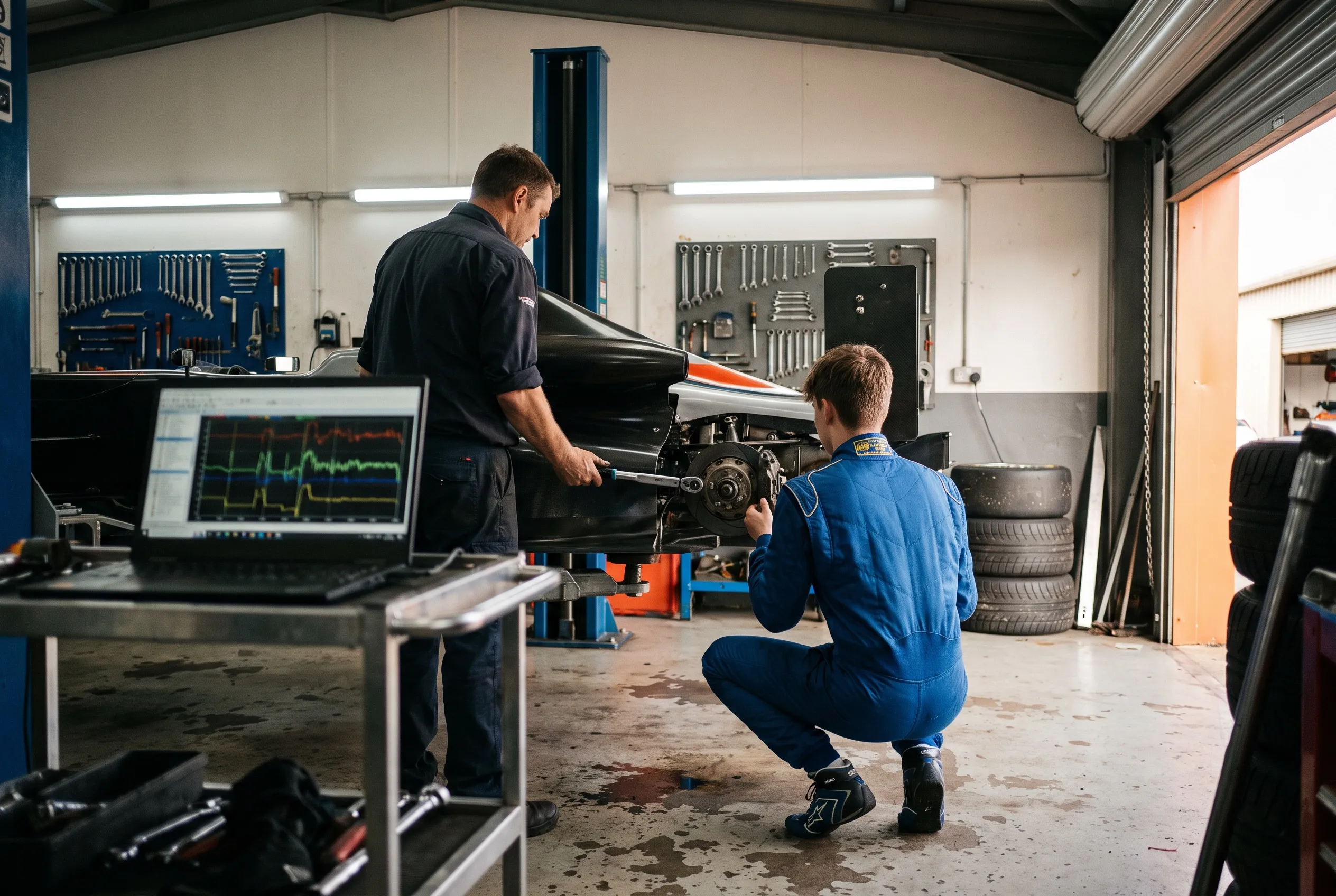
The workshop
Our fleet of karts and F4-spec single-seaters lives here, with prep bays, lifts and the tools to do our own mechanical work. Ilaria Benassi runs the karts; Davide Sorrentino runs the F4 cars.
Students spend time in here as well as in the seat. We call it data-and-spanner: read the lap, then go and find the reason for it on the car. A driver who understands the car can tell an engineer what it is doing.
The instruction room
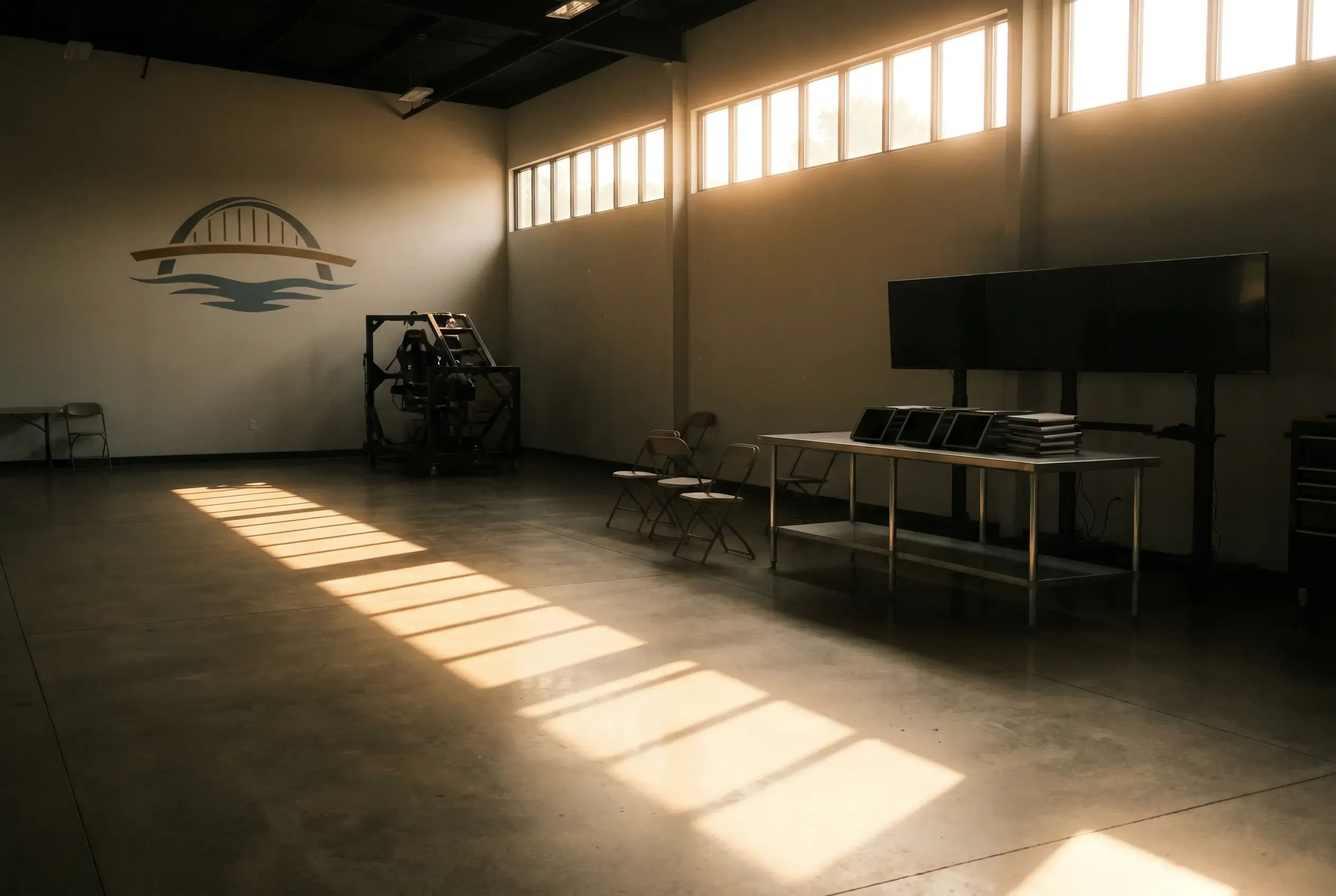
A high room with high windows and a polished concrete floor. In the afternoon the light comes in as long rectangles across it. This is where we review telemetry on tablets and the big screens, hold classroom sessions, and use the mechanical rig that simulates g-forces.
It is also where we hold open days, partner visits and outreach sessions. The room works for both without being rebuilt.
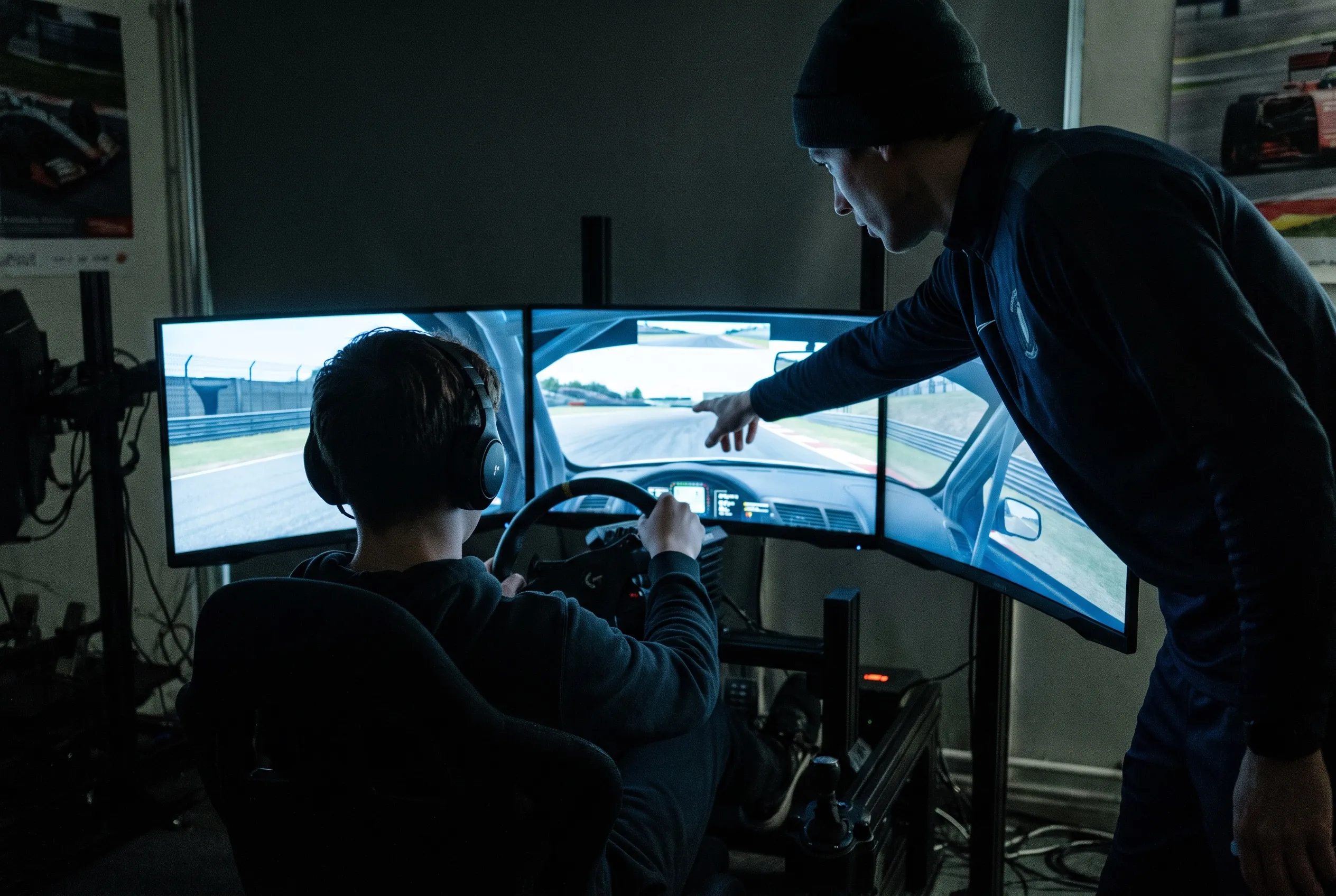
The sim suite
The simulators let students learn a circuit before they drive it and repeat a corner until it is theirs. The suite exists in part because our simulator partner supplied the rigs at well below cost in our first year.
The office
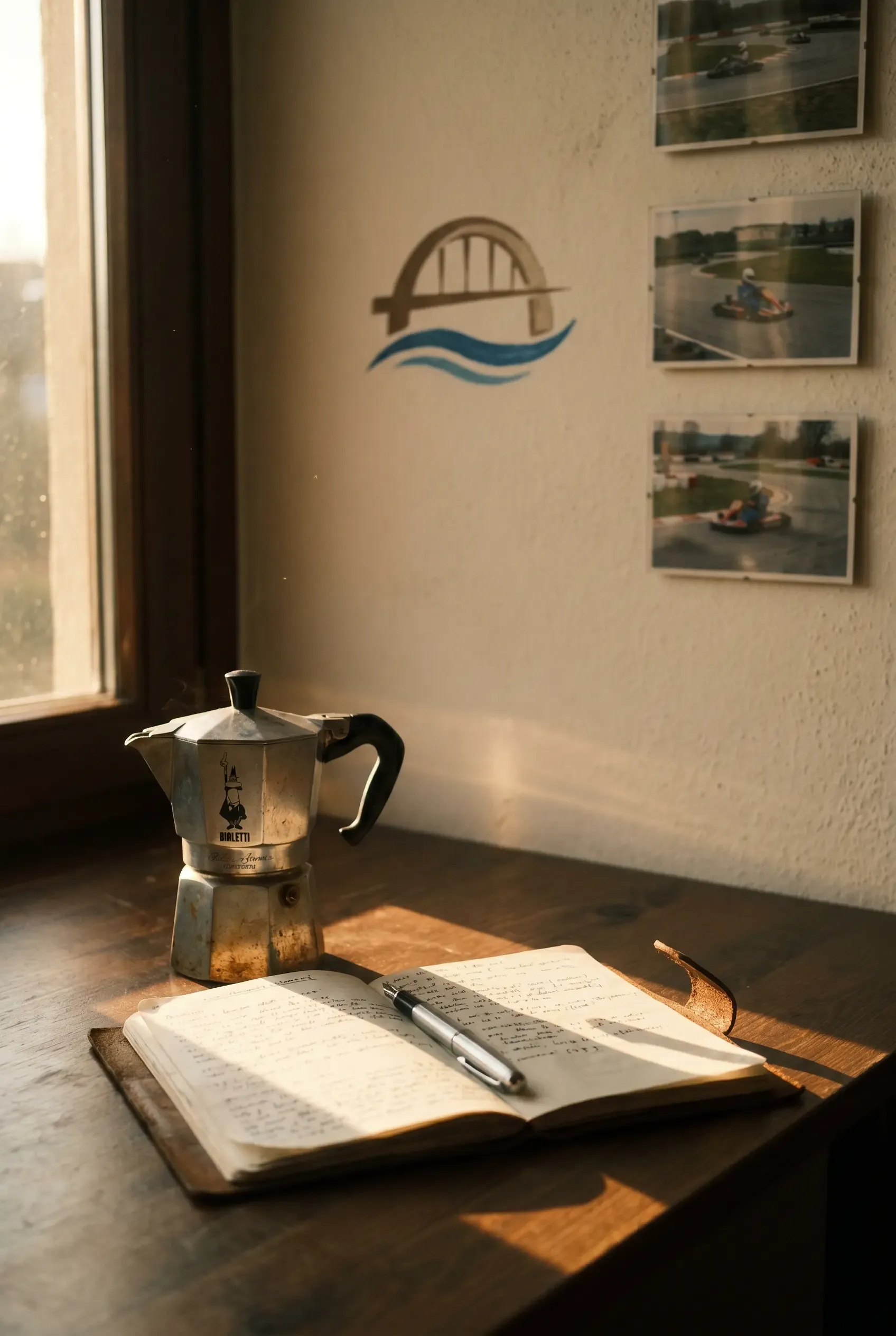
Small, on purpose. The walls carry the logo and photographs of kart tracks Alexander raced on as a boy, and one more wall of photographs: every student who has finished the programme, wherever they are now.
Berto’s moka pot lives here. He considers machine espresso an abomination, and visitors are told so.
The pit lane
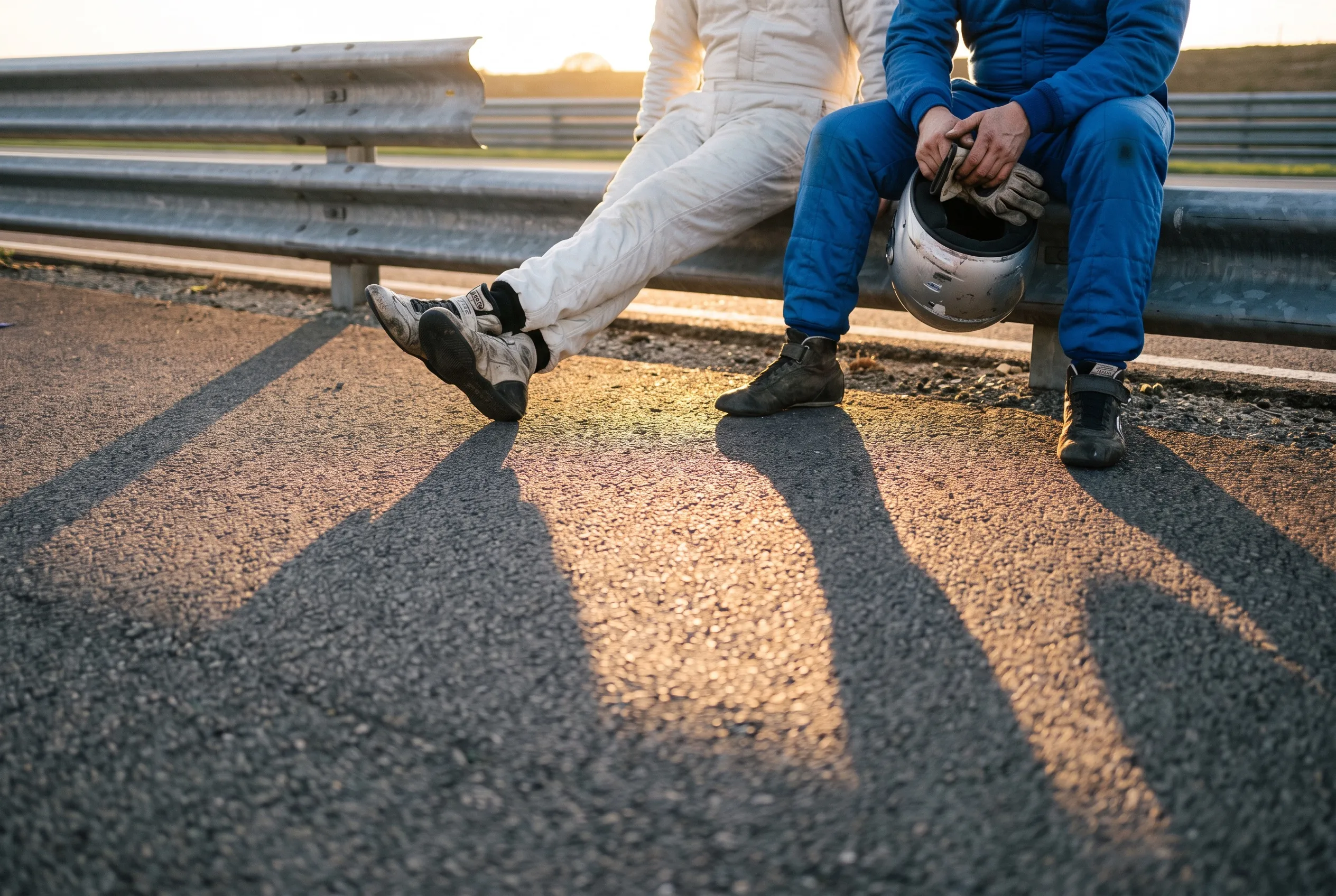
Outside the door. It is our outdoor classroom, and the place most days end: backs to the armco, legs out on the tarmac, looking down an empty track while the light goes.
Why Modena
A working circuit
The people here on a weekday are club racers and karting families, not hospitality guests. Our students learn in a place that has not been dressed up for them, which is the kind of place most of them will race in for the next few years.
Being inside the circuit also changes the arithmetic. When the track is outside the door, a session costs a morning, not a day of travel, and seat time stops being an event.
L’università del fare tutto con niente.
The university of doing everything with nothing.